Chocolate T-Shirt Design: Real Embroidery Review
First Look: A Typography Design With Instant Personality
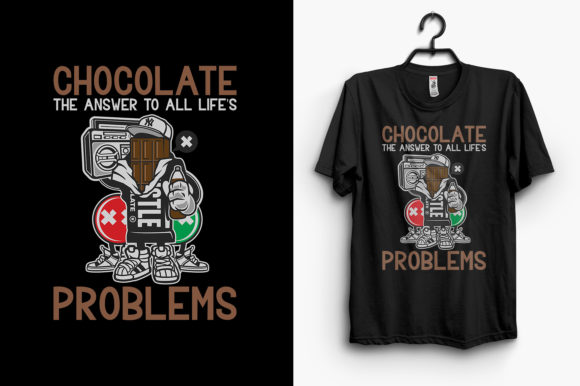
When I opened the Chocolate T-Shirt Design file, the phrase hit immediately: "Chocolate THE ANSWER TO ALL LIFE S PROBLEMS" in a lively, modern typography layout. It is the kind of statement graphic that makes people smile before they even think about buying. From an embroidery reviewer's standpoint, the first thing I notice is the mix of font weights and sizes — a bold, slightly playful headline paired with what looks like a thinner supporting line. That contrast in letterforms matters a lot when you digitize for machine embroidery, because each weight will need different stitch treatment to read clearly after stitching.
The mood is warm, humorous, and relatable. If you sell handmade products, you already know that quote-based designs move fast — especially ones tied to something universally loved like chocolate. But the real question is how the design actually behaves once you move it from a screen graphic into thread and fabric. That is what I wanted to test, and here is what I found.
Translating Typography Into Thread: What Works And What Needs Attention
Chocolate T-Shirt Design is sold as a graphic file — SVG, PNG, EPS — which means you will need to digitize it yourself or hire a digitizer before any embroidery machine touches it. That is standard for Print Templates and Graphics in this category, but it is worth saying upfront. As a designer who digitizes regularly, I look at the letter shapes, spacing, and overall layout to judge how well it will convert to stitches.
The bold main word "Chocolate" has generous letterforms with enough space between characters to avoid thread crowding. That is excellent news. In satin stitch or tatami fill, those wide counters and open loops should stitch cleanly on most medium-weight fabrics. The smaller subtitle lettering, however — the "THE ANSWER TO ALL LIFE S PROBLEMS" line — is tighter and will test your digitizing skills. If you run that at less than a quarter-inch height in thread, you risk losing legibility. I would recommend keeping the overall design width at no less than four inches for a left-chest placement, and closer to seven or eight inches for a full front print on a sweatshirt or tote bag.
Where This Design Belongs: Product Ideas That Make Sense
After studying the layout and the visual personality, I can picture Chocolate T-Shirt Design stitched onto a range of items that customers genuinely love. A unisex sweatshirt in heathered oatmeal with dark brown thread feels like an obvious and beautiful match — the earthy tones echo chocolate without looking gimmicky. Tote bags are another strong candidate. A sturdy canvas tote with this quote in rich espresso-colored thread becomes an instant conversation piece at a farmer's market or a craft fair.
Kitchen towels and aprons also come to mind. Picture a linen-blend tea towel with the design stitched near the hem in a deep cocoa thread, paired with a small chocolate bar motif. That kind of product sells well in boutique settings and as holiday gifts. For baby items, the humor might not translate unless you reposition the design onto a bib or a onesie as a playful gift for new parents — but be mindful of fabric stretch and stabilizer choice on baby clothes. I would steer clear of dense fill on thin cotton interlock and instead go with a lighter running stitch or a reduced-density satin to keep the fabric from puckering.
Stitch Quality And Design Integrity: Practical Observations
Typography-heavy designs always demand extra care in the digitizing phase. What looks charming as a flat graphic can turn into a muddy mess if stitch angles conflict or if small openings close up under thread tension. The Chocolate T-Shirt Design has a clean sans-serif foundation that digitizes more forgivingly than script or serif fonts. But there is still a caveat — the apostrophe in "LIFE S" is tiny in the graphic preview, and I would enlarge it slightly during digitizing to prevent thread breaks or needle holes punching too close together.
For commercial embroidery projects, thread color selection will make or break this design. A single-color version in dark brown on cream fabric reads as elegant and understated. A two-tone approach — perhaps gold for "Chocolate" and a warm taupe for the subtitle — adds dimension without overwhelming the simple message. If you are an Etsy seller offering personalized options, letting buyers choose thread colors could increase engagement and perceived value. But always test dark thread on light fabric and light thread on dark fabric before listing the finished product. Contrast looks different in thread than it does on screen.
The Commercial Angle: Selling Finished Products And Digital Assets
If you run a small shop or sell handmade products at weekend markets, Chocolate T-Shirt Design offers the kind of broad appeal that moves inventory. Chocolate lovers are not a niche — they are everywhere. The motivational-quote-meets-comfort-food angle also fits the current demand for cozy, joyful, slightly irreverent apparel. I can see this working on embroidered patches too. A three-inch patch with the word "Chocolate" in bold satin stitch, backed with adhesive and a merrowed edge, becomes an easy impulse buy near checkout counters or on Etsy.
For digital product sellers, the graphic files in this listing are versatile beyond embroidery. You can use them for printable mockups, sublimation prints, or screen-printed goods. But if your focus is strictly machine embroidery, remember that the files themselves are not stitch-ready. You are buying the artwork to digitize, not the embroidery file. Always double-check the seller's license terms to confirm whether you can use the artwork on products you sell commercially. Most Print Templates in this category include commercial allowances, but I never assume — I always verify directly with the shop.
Testing Before You Commit: A Real-World Scenario
Last week I prepared a custom embroidered tote bag for a client who wanted a cheeky gift for her chocolate-obsessed sister. I used the Chocolate T-Shirt Design artwork as the starting point, digitized it at a seven-inch width with a blend of satin and tatami fill stitches, and ran a test on scrap cotton twill before stitching the final bag. The test revealed two things: first, the thicker letterforms in "Chocolate" stitched beautifully at a density of 0.4 millimeters, and second, the smaller subtitle needed its spacing adjusted slightly to prevent thread bridges between words. A quick tweak in the digitizing software fixed that. The finished tote looked professional, the client was thrilled, and I added a note in my design library that this artwork digitizes reliably as long as you respect minimum sizing.
That testing step is non-negotiable, especially with typography where letter integrity is everything. If you skip it and go straight to production, you might end up with a design that looks amateurish, and customers notice. Handmade businesses thrive on trust, and crisp, well-digitized embroidery builds that trust faster than any marketing copy ever could.
Limitations And Smart Precautions
No design fits every situation, and Chocolate T-Shirt Design is no exception. Small hoop sizes — think 4x4 inches — will struggle to accommodate the full text block at a readable size. The subtitle risks becoming illegible, and that defeats the purpose of a quote design. I would not use this on a curved surface like a baseball cap unless you are comfortable reworking the text path to follow the cap's arc. Flat surfaces like tote bags, pillow covers, and sweatshirt chests are far more forgiving.
Stretchy fabrics present another challenge. If you stitch this onto thin jersey without adequate cutaway stabilizer, the letters will shift and distort after the first wash. I learned that lesson the hard way years ago on a t-shirt order, and now I always use a medium-weight fusible stabilizer plus a water-soluble topper on textured or looped fabrics like fleece. The design holds its shape beautifully with proper support, but it does need that preparation. For baby blankets or nursery decor, consider reducing the overall stitch count to keep the fabric soft and drapable — nobody wants a stiff patch on a blanket meant for cuddling.
Why This Design Deserves A Spot In Your Collection
After evaluating stitch behavior, product versatility, customer appeal, and digitizing demands, I put Chocolate T-Shirt Design in the category of "reliable all-rounder." It is not a high-risk, intricate floral that will break threads and test patience. It is a clean, communicative typography piece that does one job well: delivering a message people want to wear and share. For craft businesses focused on personalized gifts, this design opens doors to birthday presents, holiday stocking stuffers, bridal party tote bags, and even small-run boutique merchandise.
The branding potential is notable too. If you sell at chocolate festivals, bake shops, or food-themed markets, having a few products with this design signals instantly what your booth is about. Pair it with a brown kraft-paper packaging and a handwritten tag, and you have a cohesive product that buyers perceive as thoughtful and intentional. Small touches like switching thread sheen from matte to semi-gloss can subtly shift the look from rustic to polished, giving you room to adapt the same design across different price points and seasons.
Final Practical Notes For Embroidery Designers
Before you add Chocolate T-Shirt Design to your active product lineup, run your own tests on the exact fabric blends you intend to use. A design that stitches flawlessly on quilting cotton may pull or gap on polyester performance fleece. Check your thread brand's tension compatibility, experiment with underlay settings in your digitizing software, and always have a friend or fellow maker look at the stitched sample with fresh eyes. We get tunnel vision after staring at our own work, and a second opinion catches things we miss.
Keep the original graphic files organized in your design assets folder with a clear note about what size ranges worked best during your testing. That saves time on future projects and helps maintain quality consistency if you hire help later or expand into wholesale orders. If you sell the finished embroidered products on Etsy or at craft fairs, photograph the stitched design in natural light against a lifestyle backdrop — a steaming mug nearby, a cozy blanket, a torn piece of dark chocolate in the corner. Buyers respond to the feeling behind the product, not just the graphic on a plain white mockup. And if you plan to offer the digital file for resale, confirm the original seller's terms for derivative works and always credit appropriately when required.